Crescent
A thin crescent looks especially crisp shortly after sunset or before sunrise. It is a great phase for consciously tracing the boundary between light and shadow.
Whether tonight is a good night for moon gazing depends on more than the phase alone. Illumination, moonrise, moonset, and how high the moon climbs in the sky all matter — as does the question of whether you want to study craters and shadows or simply enjoy a bright full moon disk.
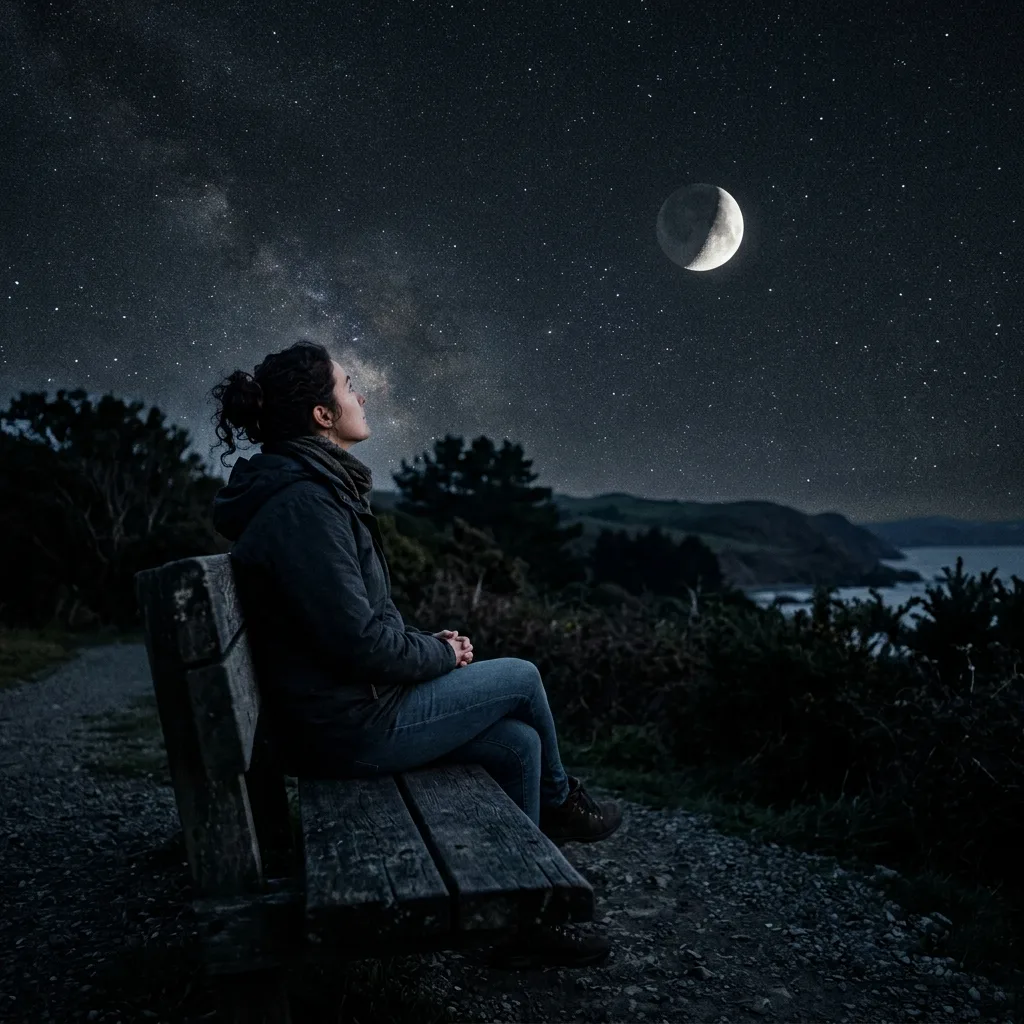
A thin crescent looks especially crisp shortly after sunset or before sunrise. It is a great phase for consciously tracing the boundary between light and shadow.
Around the first and last quarter, craters and mountain ranges often appear more three-dimensional than at full moon, because the shadows along the terminator are longer.
The full moon is bright and easy to find. It is not always ideal for surface detail, but it is unbeatable for atmosphere, a dramatic moonrise on the horizon, and calendar planning.
The best observation time always falls inside the actual viewing window: after moonrise and before moonset. That is why What Moon Phase shows local moon times and avoids recommendations that would land after the moon has already set.
The higher the moon stands, the less atmosphere sits between you and the lunar surface. The image looks steadier and shows more contrast.
Clear air, little haze, and an open horizon matter more than perfect equipment. In cities, it helps to face the darker parts of the sky.
Even a steady pair of binoculars reveals far more structure than the naked eye. A 10x50 model is a classic starting point for moon observation, and resting your elbows or using a tripod noticeably improves the view.
Moon gazing is not only an astronomical pastime. In yogic traditions, softly fixing your gaze on a single object — known as trataka — calms the stream of thoughts, and the moon's gentle reflected light is completely safe to look at directly. For a simple ten-minute practice, find a comfortable seat with a clear view of the moon, breathe slowly through your nose, and keep your eyes softly on the lunar disk for 30 to 60 seconds. Then close your eyes, watch the afterimage fade, and repeat a few rounds. An evening spent away from bright screens like this can make winding down for sleep noticeably easier.
For regular observation nights, the lunar calendar is worth a look: you can spot full moon, new moon, quarter phases, and promising viewing days at a glance, and plan your evenings well in advance.
The best time to observe the moon is when it stands above the horizon and as high in the sky as possible. Any good observation time must fall between moonrise and moonset.
The full moon is bright and easy to find, but not always the best phase for detail. Quarter moon and crescent phases cast stronger shadows and therefore reveal more structure on the lunar surface.
In everyday language, half moon describes a half-lit lunar disk. Astronomically, these are the first quarter of the waxing moon and the last quarter of the waning moon.
Yes. Unlike the sun, the moon only reflects a very faint portion of sunlight, so its brightness is completely harmless to the eye. Looking at it directly without any filter is safe.